
SUD Clinics: Federal Regulators Reopened Parity Enforcement on Sept. 8, 2026
Federal regulators are scrutinizing how payors handle mental health and substance use claims. Here is what your clinic can do with that guidance now.
4 min read
The short version
On September 8, 2026, the Department of Labor issued new parity enforcement guidance focused on the processes payors use to restrict mental health and substance use disorder care. The guidance renews enforcement of requirements from the 2021 parity rule while the stronger 2024 rule remains paused. For SUD clinics, the practical takeaway is simple: recurring problems with denials, prior authorization, medical-necessity reviews, and network access may now match issues federal regulators are actively looking for.
What the government actually did
The Department of Labor's Employee Benefits Security Administration, or EBSA, issued guidance on September 8 explaining which differences between behavioral health and medical coverage may trigger scrutiny. It also published a specific checklist of potential compliance problems.
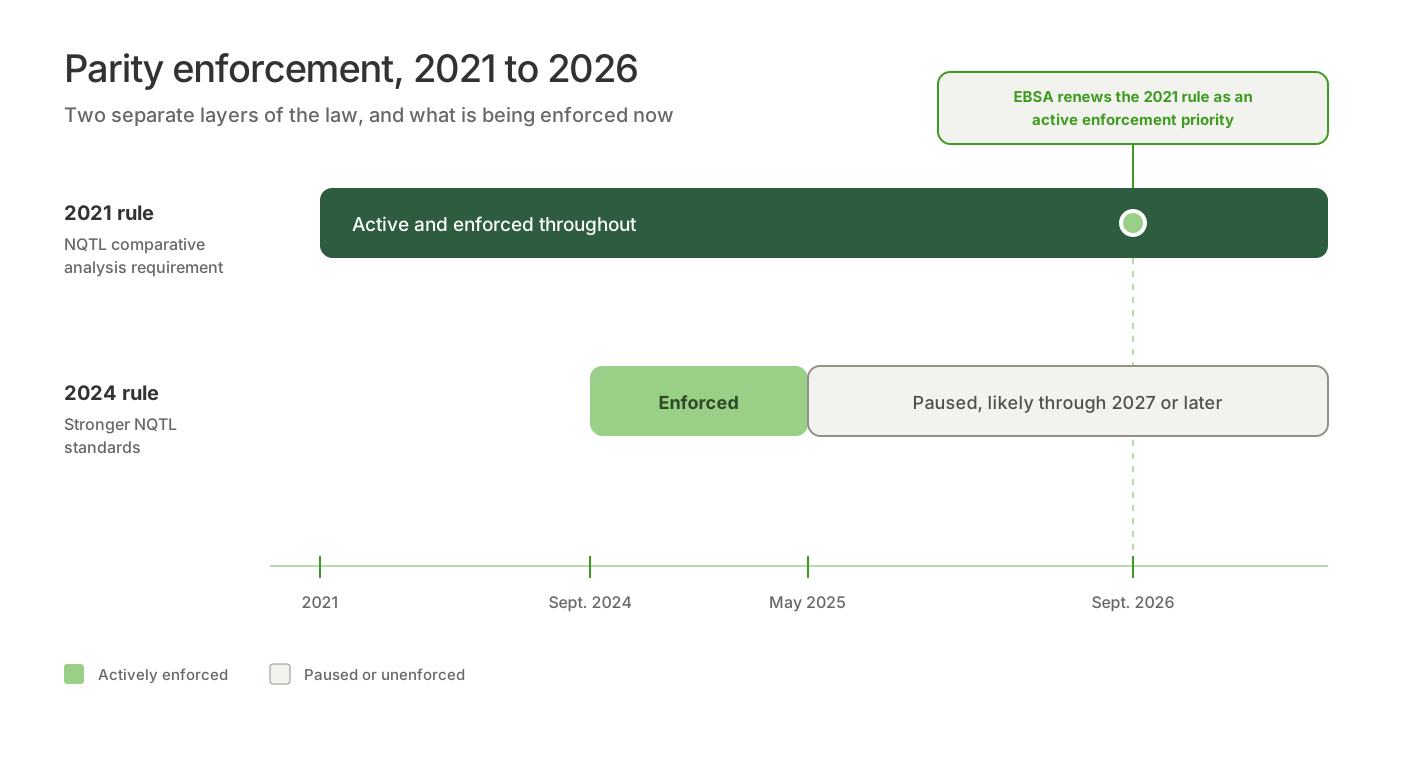
Two separate rules matter here. The 2021 rule requires health plans to document how they apply nonquantitative treatment limits, or NQTLs, such as prior authorization and medical-necessity standards. That rule remains in effect. A stronger rule issued in 2024 was paused in May 2025 and is expected to remain paused through at least 2027. The September 2026 guidance does not restart the 2024 rule. It signals that regulators are again prioritizing enforcement of the existing 2021 requirements.
EBSA said it's focusing on three things:
- Insurance companies excluding certain treatments for mental health or addiction that they wouldn't exclude for a medical condition
- How payors decide what's "medically necessary" and how they review those decisions
- Whether it's harder to find and use an in-network mental health or addiction provider than it is to find a medical one
Why this actually matters for your clinic
The government's guidance came with a list of specific things it considers red flags. Several of them are things SUD clinics deal with constantly.
A few examples straight from the guidance:
- Excluding coverage for medications like methadone, naltrexone, or buprenorphine, when a similar medical medication wouldn't be excluded
- Excluding coverage for residential treatment, IOP, or PHP, when a similar level of medical care is covered
- Taking longer to approve or review a mental health or addiction claim than a comparable medical claim
- Approving medical claims automatically while addiction and mental health claims still require manual review and extra paperwork
- Approving shorter stays for addiction treatment than for a similar medical stay
If any of these sound familiar, it's because the government is now actively watching for exactly these patterns.
What to actually do with this
When you appeal a denial. If a denial involved a slower approval process, or more paperwork, than a medical claim would have needed, you can point to this specific guidance by name (it's called Field Assistance Bulletin 2026-03, or FAB 2026-03). Naming it directly gives your appeal something concrete to stand on, instead of just saying "this isn't fair." This isn't legal advice, and every situation is different, but it's worth mentioning to whoever handles your appeals.
When you talk to a payer. Be careful here. Some of the government's new guidance is written specifically for employers who sponsor health plans, telling them what to ask their insurance administrators.[1] As a clinic, you're not in that same position, so quoting that part word for word won't land the way it's intended. What you can do is use the same language and the same examples when you raise a concern with a payer's provider relations team, or when you file a complaint with your state insurance regulator or the Department of Labor. Naming a specific federal bulletin in a complaint carries more weight than a general complaint.
Going forward. Start paying attention to your own numbers: how long your prior authorizations actually take compared to what you'd expect for a medical claim, how often your claims need manual review versus getting approved automatically, and how many days of treatment typically get approved at once. The government's guidance keeps pointing back to real data like this. Having it on hand matters more than just knowing the rule exists.
The bottom line
Regulators have handed clinics a clear list of the payor practices they are checking for. If your clinic is seeing slow approvals, extra paperwork, automatic reviews, treatment exclusions, or shorter approved stays, document those patterns and use the guidance to make appeals and complaints more specific.
This is general information, not legal advice. Payor responses may vary. Read the full guidance and talk to a lawyer or compliance advisor before building it into your appeals process.
Sources
- [1] U.S. Department of Labor, Employee Benefits Security Administration, "Identifying Potential Problems: If You See the Following in Written Plan Provisions or Plan Operations, Think Twice about Possible MHPAEA Compliance Problems" (issued in connection with Field Assistance Bulletin 2026-03, Sept. 8, 2026). The fiduciary questions referenced above appear under "Best Practices for Keeping MHPAEA Compliance in Mind When Selecting Health Plan Service Providers," which is addressed to health plan fiduciaries, not treatment providers. Read the source
- [2] U.S. Department of Labor, Employee Benefits Security Administration, "Field Assistance Bulletin No. 2026-03" (Sept. 8, 2026). Read the bulletin